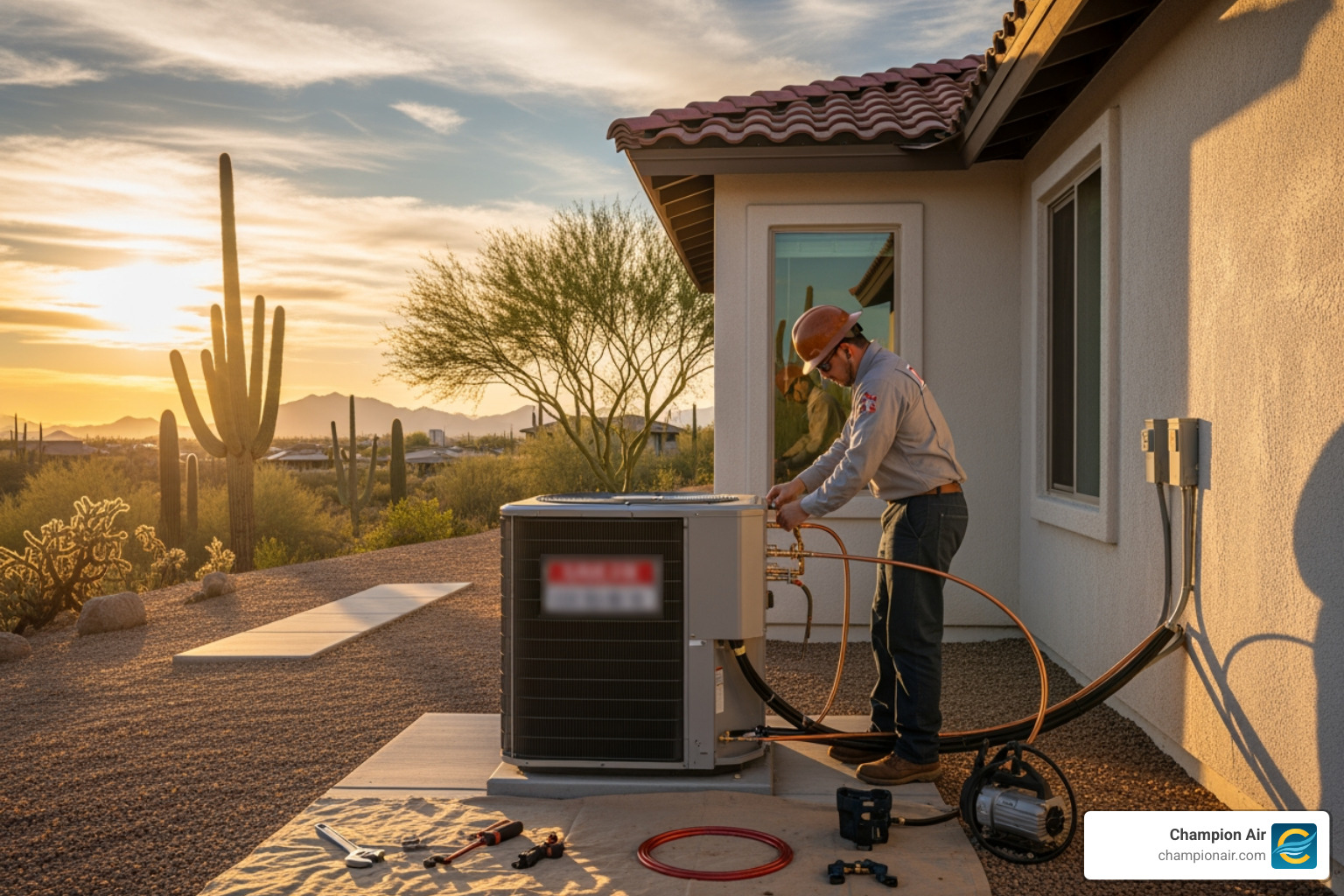

Why Is My AC Not Cooling?

Summer is the perfect time for fun in the sun, but when you head inside, the last thing you want is to be greeted by warm air instead of a cool breeze. Finding your AC unit not cooling can be a major disappointment. Wondering what could be wrong? Don’t let an unexpected AC malfunction ruin your day.
Here are some common culprits to check before you call in the professionals for a reliable fix:
- Clogged air filters
- Refrigerant leaks
- Faulty thermostat
- Dirty condenser coils
- Undersized AC unit
Identifying the issue is the first step to getting your cool refuge back. Ready to fix the problem? Let’s explore how you can tackle these challenges or when to decide to call in the experts.
Bring Back Cool Air with Help from the Team at Champion Air
If you’re struggling against summer temps with an AC that’s not blowing cold air, contact Champion Air to get your system back on track. We provide stellar service for all AC brands, new and old. And, with a Better Business Bureau A+ rating, you can rest easy knowing your home — and your family’s comfort — are in the very best hands. To ask about or set a time for your AC repair, contact our team today.
Clogged Air Filters

The air filters in your home’s HVAC system play a crucial role—they trap dirt and debris from the air, preventing these particles from circulating throughout your home. However, when these filters become dirty or clogged, they significantly reduce airflow. This decreases your AC unit’s cooling efficiency and can strain your system, potentially leading to higher energy bills and a shorter lifespan for your AC.
If your home isn’t cooling as expected, checking your air filters is a good idea. You might find that they need cleaning or replacing. For optimal performance, replace the filters at least every three months, or more frequently if recommended by your property manager or the manufacturer’s guidelines. In households with pets or in particularly dusty environments, you may need to change your filters even more often.
By maintaining a regular schedule for replacing your filters, you ensure that your AC runs more efficiently, keeping your home comfortably cool and your air cleaner.
Refrigerant Leaks
Refrigerant is a chemical compound vital to your AC unit’s ability to cool your home. It works by absorbing heat from inside your home and releasing it outside. However, if there is a refrigerant leak, your system’s cooling capacity is compromised, and it often just circulates warm air instead.
Signs of a refrigerant leak include unusual ice buildup on your external air conditioning unit and warm air blowing from your vents, often accompanied by a hissing sound—which indicates escaping gas. These symptoms suggest that the refrigerant is not cycling through the system effectively.
Dealing with refrigerant issues goes beyond simple DIY fixes and requires professional expertise due to the specialized nature of the systems and the potential environmental impacts of refrigerant gases. If you suspect a leak, it’s crucial to contact a certified technician who can safely repair the leak, recharge the system, and ensure that your AC is operating efficiently and safely.
Faulty Thermostat
The thermostat serves as the control center of your air conditioning system, dictating when it turns on and off, and the target temperature for your home. If your thermostat is outdated or malfunctioning, it may cause several issues:
- Inaccurate Temperature Readings: Misreading the indoor temperature can lead to inadequate cooling or excessive energy consumption.
- Program Errors: It may not follow your scheduled settings, causing the AC to activate at inappropriate times.
- Connectivity Issues: A lack of response might be due to dead batteries or a tripped circuit breaker.
Always make sure your thermostat is clean, powered up, and programmed correctly based on your home’s desired temperature. The AUTO and ON functions are important, too. The “AUTO” function is generally more energy-efficient because it activates the AC only when necessary to maintain the desired temperature. In contrast, the “ON” setting keeps the fan running continuously, which might increase comfort but also raises energy consumption.
Dirty Condenser Coils
That large, grate-like structure that wraps around your outdoor AC unit isn’t just for show. That’s probably your condenser coil, which features thin metal slats or fins that act as vents to release hot air created by the AC system.
If your AC isn’t cooling, it could be due to dirty coils. This issue can often be resolved by simply cleaning your unit. Clear away any obvious debris, such as dead leaves and weeds, and use a soft-bristled brush to carefully scrape mud and twigs off the coils.
Undersized AC Unit
Sometimes, a too-warm interior isn’t caused by a malfunctioning AC unit but rather by having a system that’s too small for the space you’re trying to cool. Air conditioners are not one-size-fits-all appliances; they’re selected according to how many British thermal units (BTUs) they produce per hour. Larger homes may need larger units, but there are other factors to consider, including:
- How well your home was constructed
- What materials were used during construction
- Whether walls, windows, etc., are well-insulated
- The impact of your local climate
If you’ve added onto your home or inherited a small unit from a former owner, it could be time to upgrade your unit. Or, you might want to add an additional one to expand your cooling capabilities.
Schedule Service Today and Discover the Champion Air Difference
We’ve been keeping Arizona’s AC systems running like a champion since 1982. That’s more than four decades of fast and reliable service, including 24/7 emergency and same-day service calls to ensure you’re comfortable around the clock. Whether you have a clogged filter, refrigerant leak, or an HVAC woe of unknown origin, our talented team is standing by and ready to execute top-notch AC repairs.